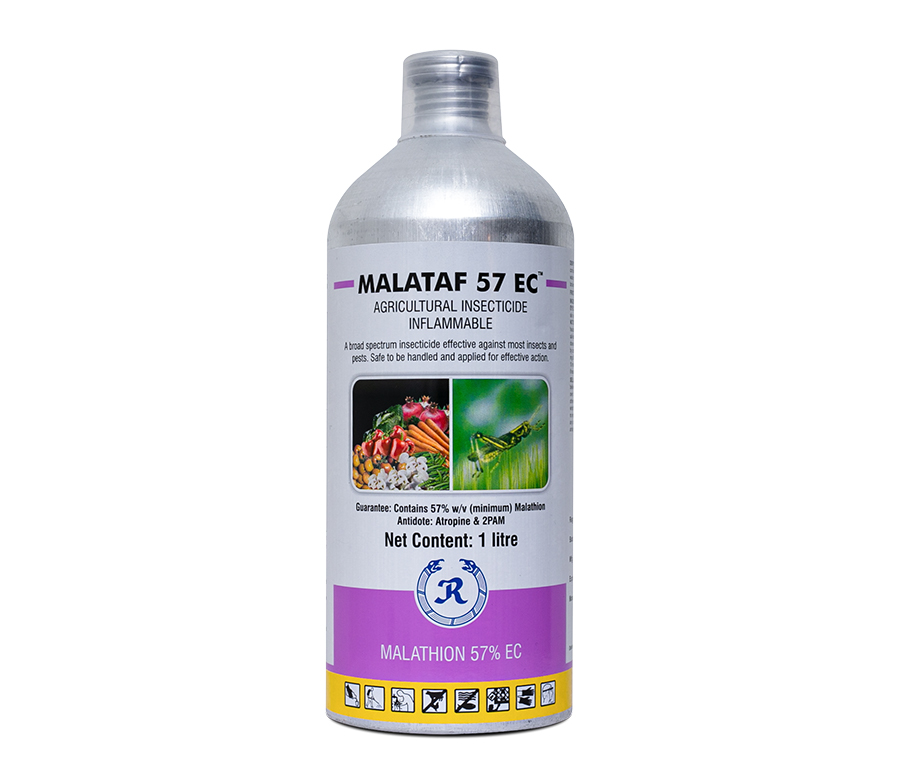
Malataf ltr
Malataf 57 EC is a widely used agricultural insecticide that belongs to the organophosphate group and contains malathion (57%) as its active ingredient. It is formulated as an emulsifiable concentrate (EC), meaning it mixes easily with water to form a spray solution that farmers can apply using knapsack sprayers. This chemical is known for its broad-spectrum activity, making it effective against a wide range of insect pests that commonly attack crops in the field.
Malataf 57 EC works by interfering with the nervous system of insects. It inhibits an important enzyme called cholinesterase, which leads to paralysis and eventually death of the pest. It acts mainly through contact and ingestion, meaning it kills insects when they come into contact with the spray or when they feed on treated plant surfaces. Because of this mode of action, it provides quick results and is often used when there is a serious pest outbreak.
The insecticide is effective against many common agricultural pests such as aphids, whiteflies, thrips, caterpillars, leaf miners, borers, and even some mites. Due to this wide control range, it is commonly applied on various crops including vegetables like tomatoes, cabbages, and onions, as well as fruits, cereals, and legumes. Farmers prefer it because it can handle multiple pests with a single application, saving both time and cost.
In terms of application, Malataf 57 EC is usually mixed with water at recommended rates, often around 50 ml per 10 liters of water, although the exact dosage may vary depending on the crop and pest severity. It is best sprayed early in the morning or late in the evening to improve effectiveness and reduce harm to beneficial insects. Proper coverage of the plant, especially the underside of leaves, is important since the chemical is not systemic and does not move inside the plant tissues.
Despite its effectiveness, Malataf 57 EC must be used with caution. Being a chemical pesticide, it can be harmful to humans, animals, and beneficial organisms if misused. Farmers are advised to wear protective clothing such as gloves, masks, and long sleeves during application. It should not be sprayed near water sources because it is toxic to fish and aquatic life, and care should be taken to avoid spraying during flowering periods to protect bees.
Explore More
Ametryne
Jembe 500ml
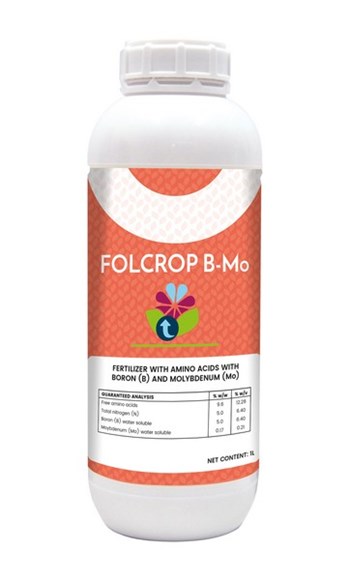
B mo ltr
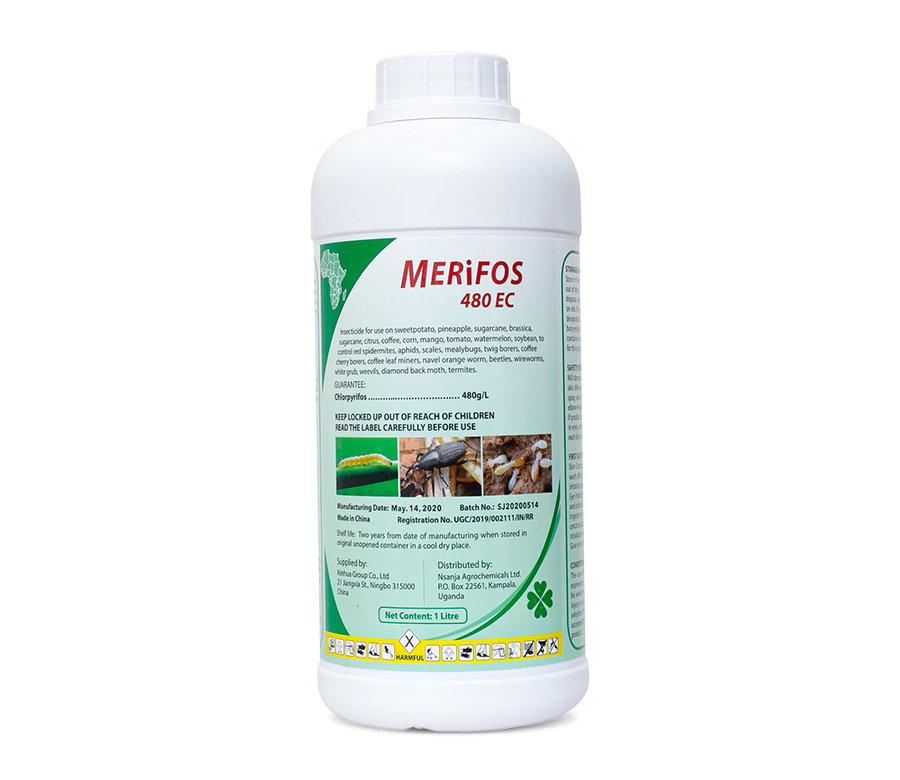
Merifos ltr
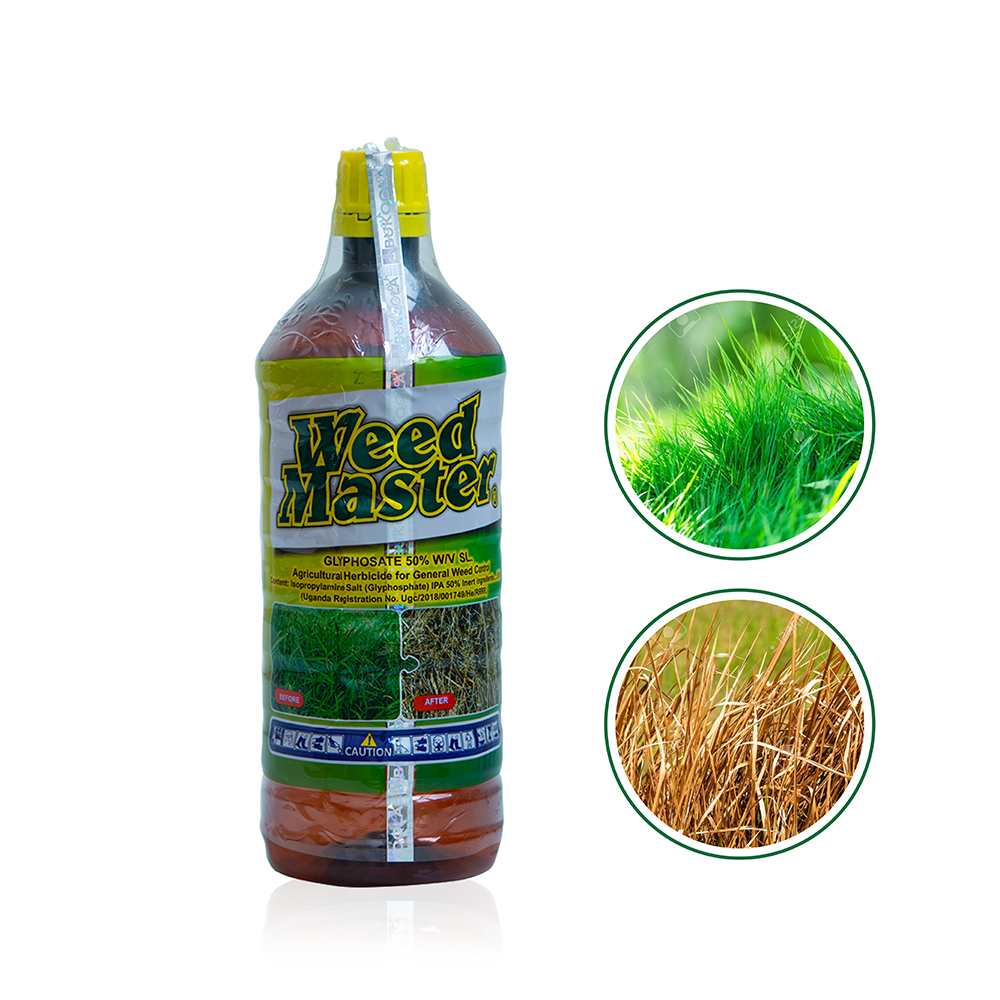
Weedmaster 500ml
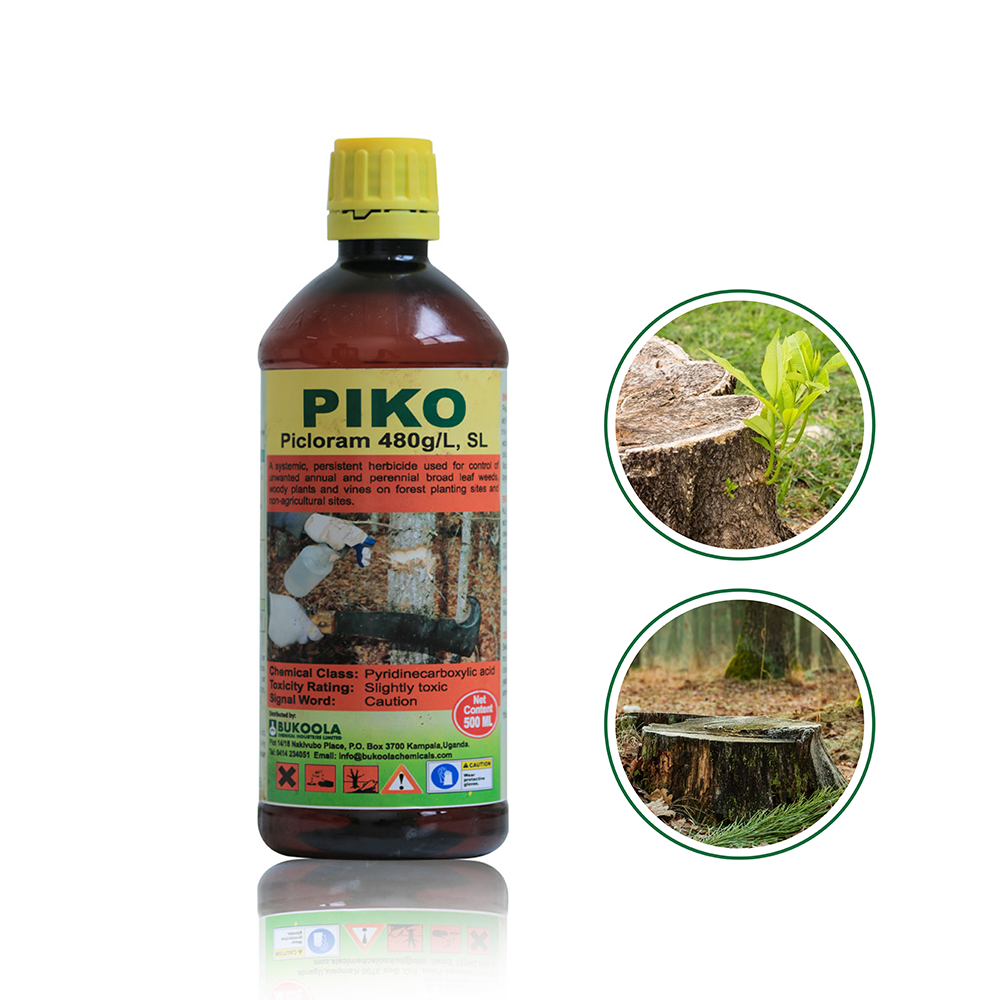
Piko 500ml
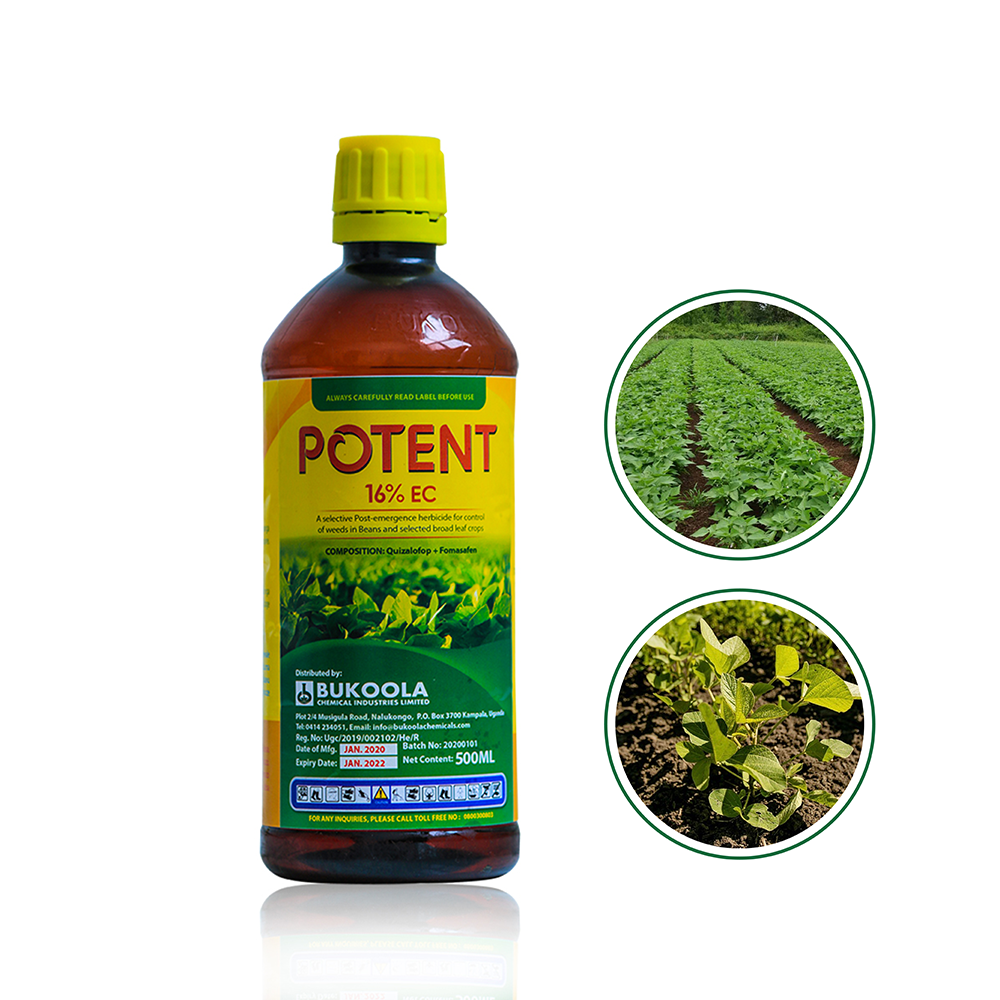
Potent 500ml